ACUI Wraps Up a Busy Season of Leadership and Professional Development Programming
ACUI members capped a full slate of summer programming, taking advantage of five institutes and orientations for student leaders and professionals in the United States and the United Kingdom. The June and July programs spanned leadership development, new professional orientation, and a national research initiative on the future of the college union.
In partnership with NUS Charity, the first event took ACUI overseas with I-LEAD® UK, June 20–25 at the University of Westminster in London. The leadership institute began with two days of facilitation team training ahead of the full program and was the first such event ACUI has hosted outside the United States.
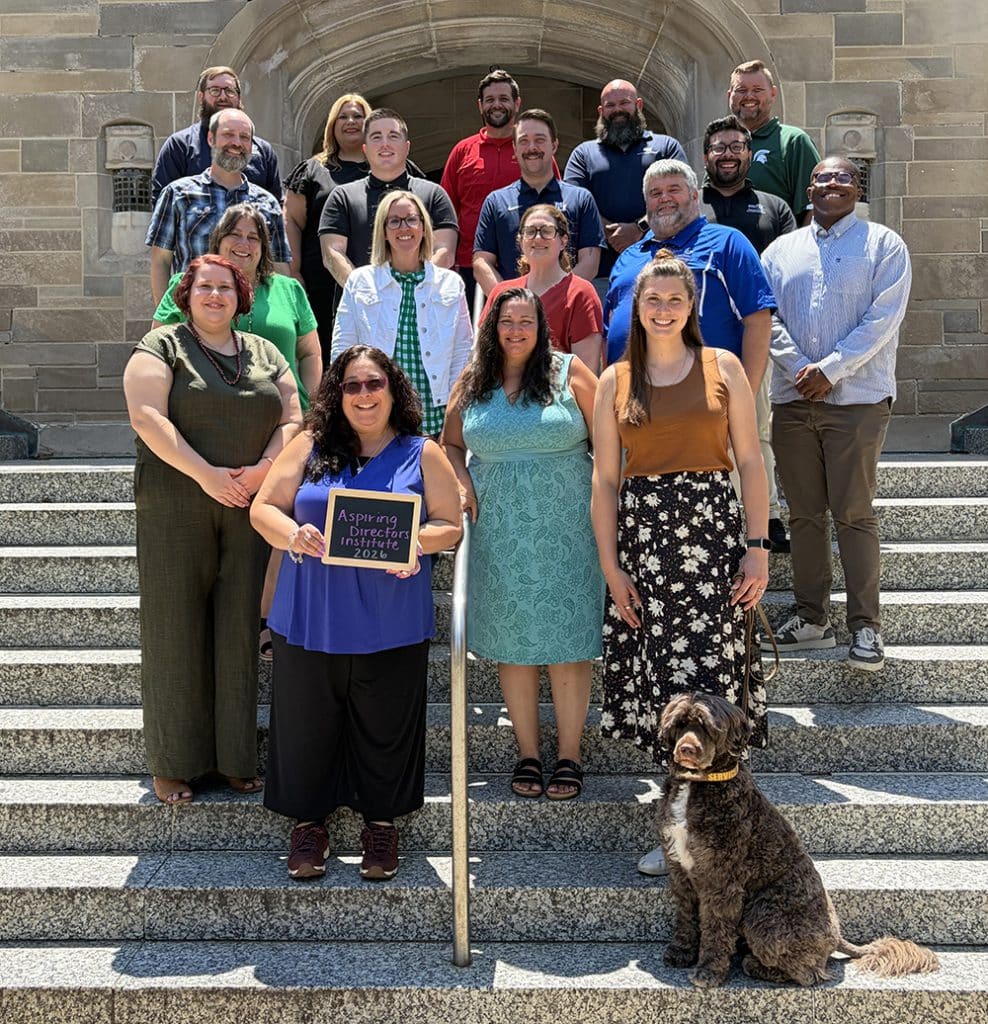
From July 13–16, Indiana University–Bloomington hosted the Aspiring Directors Institute and IPDS: New Professionals Orientation concurrently, drawing 50 attendees for a combined 26 sessions, three campus tours, and presentations from 18 unique presenters.
The Aspiring Directors Institute featured a session on “Blueprint for the College Union,” presented by Mary Russell, assistant director of social education at the Wisconsin Union and ACUI’s current Region V director. The session introduced a national initiative led by the Wisconsin Union in collaboration with ACUI and colleagues across the United States to define, validate, and advocate for the enduring purpose and evolving role of the college union. The effort is designed to produce a toolkit of resources supporting the relevance and impact of college unions for decades to come, with a timeline that includes beta-testing research findings in the coming months, a draft toolkit in February 2027, and a symposium marking the 100th anniversary of the Wisconsin Union’s Memorial Union building in June 2027.
IPDS: New Professionals Orientation welcomed new college union and student activities professionals into the field. A highlight of the orientation was a panel on getting involved with ACUI, featuring four of the Association’s regional directors: Lauren Gyursin (Region VI, Virginia Commonwealth University), Jenny Puccinelli (Region I, California State University–San Bernardino), Audrey Taggart-Kagdis (Region II, Washburn University), and Chrissie Taylor (Region VII, Rutgers University–Camden). New professionals also heard from Leonard Taylor, associate professor in the College of Education and director of the National Survey of Student Engagement, who led a session on using assessment data to communicate programmatic impact to campus stakeholders.
Attendees left the orientation with practical strategies they could apply immediately on their campuses. One attendee, responding to a question about the best “takeaways” from IPDS, wrote: “For me, I’m most excited to bring back some of the theory and assessment pieces I learned. I feel it’s an area of growth for me and so to learn more about how to put those things in practice is exciting.”
Another member in attendance added, “I am excited to become a better supervisor for my student employees. I have a new goal to facilitate 1:1 meetings with my students periodically and learned some ways I can better train my students for their role.”
The University of South Florida–St. Petersburg hosted back-to-back events in July. The Student Organization Institute was July 20–22 and offered sessions on advising student organization advisors, managing conflict within student organizations, navigating organizational policies and processes, and engaging commuter students. I-LEAD® US was hosted at the same campus, July 18–23, with the annual focus on student leadership and development.
Posting to his LinkedIn followers, Jarrick Brown, director of student life and campus community at the University of Colorado–Denver, shared that the Student Organization Institute “exceeded every expectation. The sessions, conversations, and networking were outstanding, but one takeaway stood out: There is no one-size-fits-all approach to supporting student organizations. Every campus does things differently, yet we’re all working toward the same goal: creating meaningful experiences that help students belong, develop as leaders, and succeed.”