
Volunteers from Georgia, California, New Jersey, and North Dakota Will Lead Regions I, III, V, and VII
Two current regional directors, a past Regional Conference chair, and the creator of the popular Region VII outreach program, Grad & Grow, will be taking the helm of their respective regions later this year. Jennifer Lex Puccinelli of California State University–San Bernardino, Jeremiah Johnson from the University of Georgia, Aaron Flynn of the University of North Dakota, and Montclair State University’s Antonio Talamo are ACUI’s regional directors for the upcoming terms of office that will begin at the 2026 Regional Conferences later this year.
Puccinelli will again lead Region I volunteers from Arizona, California, Hawaii, Nevada, New Mexico, Australia, and the Territory of Guam, while Johnson is resuming his guidance of volunteers from Alabama, Florida, Georgia, Mississippi, North Carolina, South Carolina, Tennessee, Bermuda, and Puerto Rico. Flynn, a past Region V conference chair, is heading up regional activities in Illinois, Iowa, Minnesota, Nebraska, North Dakota, South Dakota, Wisconsin, and Manitoba, and Talamo, who helped create the Grad & Grow program, will lead Region VII volunteers from Delaware, District of Columbia, Maryland, New Jersey, New York, Pennsylvania, and Quebec.
The following are the new regional directors shared “primary strategic issues” they said were facing the regions, the Association, and the future:
Puccinelli: “One of the most important strategic issues facing ACUI right now is sustaining meaningful engagement, especially ensuring that both students and professionals see clear value in participating at the regional level. As ACUI has emphasized through the Role of the Regions initiative, regions are a primary connection point for engagement, providing inclusive and accessible community-building experiences that support leadership development, networking, and professional growth. Over the past two years, I’ve seen how important it is to intentionally create those connection points. In my role, I’ve worked to expand engagement through a series of virtual roundtables and by leading a Regional Conference that focused on rebuilding participation and aligning with ACUI’s strategic priorities. These efforts reinforced for me that engagement isn’t just about large events, it’s about maintaining consistent, accessible opportunities that help members feel connected to the association and to each other.”

Johnson: “Region III, and the Association as a whole, face critical challenges in sustaining volunteer engagement, adapting to financial pressures, and ensuring we continue to effectively support our members in a rapidly changing higher education and political landscape. While many factors contributing to these challenges are beyond our control, now is the time for us each to ask, ‘How can I make a difference? How can I help our Association remain focused on advancing the campus community?’ We do it through commitment, which looks different for each of us. It’s committing to the small stuff now and committing to do more when we are able. It’s about sharing our experience and the positive impact our Association has made on our personal and professional lives. It’s tuning-in and participating in programs and opportunities when we have the chance so that those things continue. It’s giving back when we can. It’s volunteering. It’s modeling the values we hold dear as an Association.”
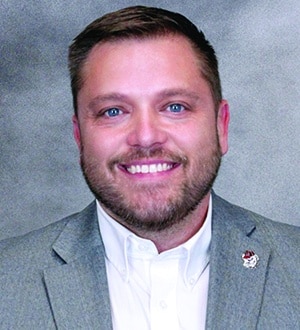
Flynn: “One of the biggest issues facing ACUI right now is the growing complexity of the work and the need for more clarity within it. College unions sit in a unique space on campus. We touch operations, student development, partnerships, and a lot of the in-between. That has always been part of the job, but the expectations in each of those areas have expanded and started to overlap in ways that are not always clearly defined. Because of that, I think one of ACUI’s most helpful roles is giving professionals ways to sort through that in a way that actually connects to the work they are doing every day. A good place to start is how we talk about the role of the college union. In practice, most of the impact comes from how students experience that space and the people in it. That might be a large event, or it might be a student who feels comfortable enough to stay a little longer between classes. It can also show up in student employment, where students are learning how to communicate, adapt, and solve problems in real time.”
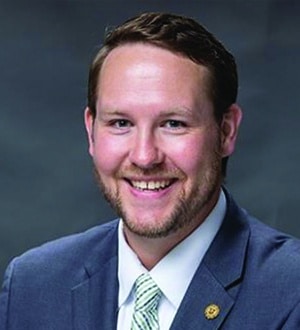
Talamo: “One of the most pressing issues facing ACUI’s regions is the limited capacity many professionals have to engage in volunteer work. Student affairs professionals are balancing increasingly complex roles on their campuses, and many who value ACUI’s mission simply do not have the time to commit to traditional volunteer structures. Another challenge is funding and access to professional development. Travel budgets have decreased at many institutions, making it difficult for professionals, especially early career staff, to attend regional or international conferences. Without accessible entry points into the Association, we risk losing opportunities to connect with professionals who would benefit from and contribute to the ACUI community. Finally, there is a growing population of early-career professionals and graduate students who are not fully aware of ACUI and the value it provides to no fault of their own. To address these issues, I believe regions should continue to expand flexible and accessible engagement opportunities. This includes shorter, lower-cost professional development experiences, virtual or hybrid programs, and one-day institutes that allow professionals to participate without significant travel or financial commitments.”